Ferguson was
frustrated.
At the Battle of Wofford’s Iron Works (Spartanburg) on
August 8, 1780 American Col. Isaac Shelby and his frontiersmen played cat and
mouse with Cornwallis’ man and eluded his British force with taunts and jeers on
a hillside out of musket range.(1) This
came just a little over a week after Loyalists surrendered to Col. Shelby’s
Indian fighters at Thicketty Fort without firing a shot.
That frustration would mount as on August 19th the Patriot bands
of warriors under Shelby, SC militia Col. James Williams and Patriot Col. Elijah
Clarke slipped in behind Ferguson's lines during a night-time ride and engaged
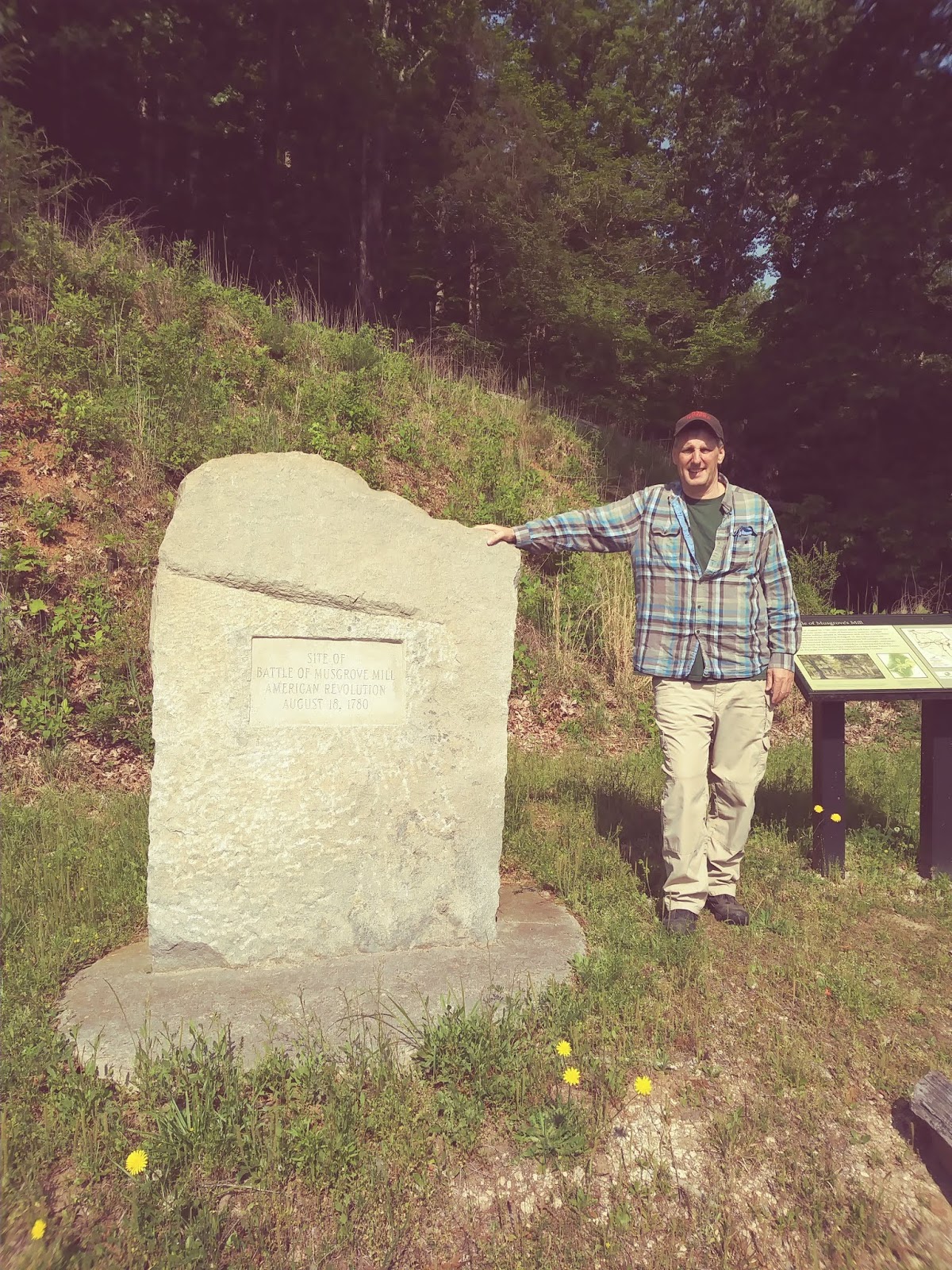
Loyalists at Musgrove Mill (present-day southern, Spartanburg County) that morning. The American Revolutionaries numbered about
300 men at arms.
After halting in an open Indian field about a mile from the
Ford of the Enoree River, scouts were sent out to gain intelligence on the
enemy just before dawn. Shots were fired
and the scouts, though some wounded, made it back to camp and reported enemy
numbers to be over twice the anticipated force of 200.
Sometime during the night reinforcements, intended for Col.
Ferguson, had arrived at the British camp and were anticipating joining up with the left wing of the
Red Coat army on their march northward. Among
these in camp at Musgrove Mill were two hundred Provincials from New York under
the command of Colonel Alexander Innes.
Shelby
was outnumbered, his horses were spent, and his enemy would be reinforced by Ferguson
soon.
Shelby needed to draw again from his tactical skills forged
in the furnace of Indian wars. He chose
to fight. He ordered his men to build breastworks of fallen logs and brush
across the expanse of the open field in a rough semi-circle. His plan to use cover and concealment during the battle would equal the playing field to the benefit of his men, as the British would be attacking a more fortified position without cover of their own. Shelby and his contingent of frontiersmen
under the bold Josiah Culbertson were on the right. Williams and his South Carolina
militia were in the center. Clarke’s courageous Georgia troops were on the
left. Reserve troops were within earshot
and hidden nearby; while the horses were staged in the rear.
The trap was set.
Now for the bait.
 |
| Looking up towards the British encampment |
British Colonel Innes urged his reluctant peers in the war
council to make haste and give fight to the rebel band who he had little regard
for. Some in the council wished to finish their
breakfast and wait for Ferguson, but Innes was insistent. As they made ready, Patriot Captain Inman and
25 men sallied in towards the King's camp and fired at the British from across the
river, enticing them to give chase.
Innes did not hesitate nor disappoint.
Innes’s whole force, save one hundred in reserve at the house, followed down and then up the hill on the heels of Inman and his party of Whigs; whom they believed represented the whole of the rebel band. Unknown to them, Josiah Culbertson's party were concealed on their flank as they moved up the hill.(2) The loyalists, answering the bugle calls,
drums and shouts of their leaders, formed up and advanced to within 70 yards of
the breastworks, bayonets at the ready.
 |
| Looking up towards the Patriot breastworks |
The forty men in reserve were called up and filled the ranks of the riflemen who were being pressed hard. At this critical juncture, Colonel Innes was killed by one of the Over the Mountain men and in the ensuing moments the tide changed for the advancing British.
The frontiersmen let out an Indian war cry
and rushed into the fray of smoke and powder and into close quarter combat. The screams, the gun fire and the battle yell
of charging wild warriors were all mixed with the smoke that made it impossible
to see beyond 20 yards.
The loyalist
militia in front of Clarke gave way and began to fall back. Soon it was a full-blown retreat as
the British ran back down the road from which they had come. The dead and wounded lay scattered along the
route as the Patriots were in hot pursuit and continuing to engage their enemy, even into the river ford.
One of the Tories, still bold despite the retreat, decided
to drop his trousers and show his mooned cheeks to his pursuers as he made his way
up the opposite hill. He was paid in
full with a bullet to his pasty white backside and carried off in shame and
discomfort.(3)
In just about an hour of heavy fighting the smoke clears,
and Shelby is the victor. He has now beat the enemy three times in the field under less than favorable conditions, all within 3 weeks time.
The victory is short lived as an express rider comes in from Colonel Davie at the Waxhaws informing the victors of the defeat of Gates at Camden, SC.
The victory is short lived as an express rider comes in from Colonel Davie at the Waxhaws informing the victors of the defeat of Gates at Camden, SC.

As Ferguson arrives too late to assist in the battle it is
evident that Shelby has eluded the British Colonel once again. His subsequent pursuit into the North State is met with equal
results.(3,4)
But South Carolina is without a formal army to oppose the British
and Cornwallis has his sights set on Charlotte and beyond. Cornwallis sends Ferguson into the mountains where he imprudently threatens to lay waste to Scots-Irish Patriot homes and hang their leaders.
General Washington sends Nathaniel Greene and
Daniel Morgan south to raise an army and continue the fight.
The Over the Mountain men begin raising their
own army and are helped in recruitment by the bold and aggressive talk of Ferguson.

A reckoning is coming!
A reckoning is coming!
Freedom Reigns!
(1)King’s Mountain and It’s Heroes: History of the Battle
of King’s Mountain, October 7th, 1780, and the Events Which Led to
It, Draper, Allaire
(2)http://sc_tories.tripod.com/battle_of_musgrove_mill.htm
(2)http://sc_tories.tripod.com/battle_of_musgrove_mill.htm
(3)Before They Were Heroes at King’s Mountain, Randell
Jones
(4)Parker’s Guide to the Revolutionary War in South Carolina,
John C. Parker